
Your distributed team works well remotely. Productivity is up. Deadlines get met. But something feels off. Team members rarely chat outside of scheduled calls. Inside jokes don’t exist. New hires take months to feel connected. The culture you imagined building feels more like a collection of individual contributors than a cohesive team.
[Coworking spaces](https://en.wikipedia.org/wiki/Coworking) improve company culture by creating structured opportunities for spontaneous interaction, establishing physical touchpoints for distributed teams, and providing neutral environments where remote workers can build relationships beyond screens. The impact depends on intentional design, consistent usage patterns, and clear cultural objectives rather than simply booking desk space.
Why Remote Teams Struggle With Culture
Culture doesn’t happen by accident. It emerges from repeated interactions, shared experiences, and casual moments that build trust.
Remote teams face a specific challenge. Every interaction requires intention. You can’t bump into someone at the coffee machine. You can’t overhear a conversation about a project challenge and offer help. You can’t read body language during a difficult discussion.
Scheduled video calls create connection, but they feel transactional. Everyone shows up with an agenda. The call ends. People return to their separate spaces.
This isn’t a productivity problem. It’s a relationship problem. Teams that only interact through scheduled meetings develop working relationships, not team bonds.
The question isn’t whether your team can function remotely. Most can. The question is whether they can build the kind of culture that makes people want to stay, contribute ideas freely, and support each other through challenges.
How Physical Spaces Change Team Dynamics
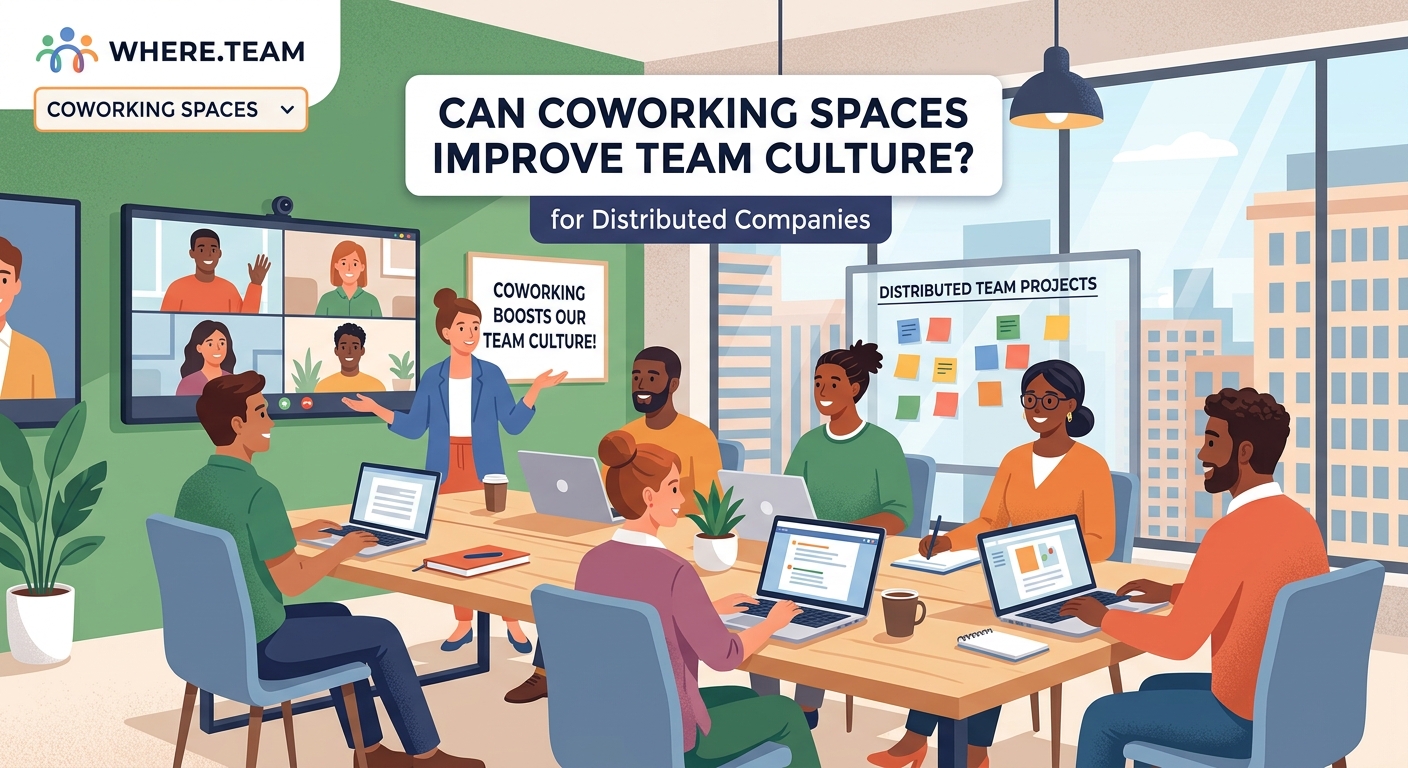
Coworking spaces create something video calls can’t replicate: shared physical presence.
When team members work in the same space, even occasionally, different behaviors emerge. Someone asks a question without scheduling a meeting. Two people grab lunch and talk about a client problem. A designer overhears a developer’s frustration and suggests a solution.
These moments feel small. They add up.
Research on team cohesion shows that informal interactions predict team performance better than formal meetings. The casual conversations build trust. Trust enables honest feedback. Honest feedback improves work quality.
But not all coworking arrangements create these moments. Booking individual desks in a large coworking space where team members never cross paths doesn’t build culture. The space itself matters less than how teams use it.
Three Ways Coworking Spaces Build Culture
1. Creating Collision Points
The best coworking setups force positive collisions. Shared kitchen areas. Communal tables. Meeting rooms that require walking past other team members.
These design elements aren’t accidental. They create opportunities for the spontaneous interactions that build relationships.
A startup founder we spoke with schedules her distributed team into a coworking space one week per quarter. She specifically chooses spaces with open layouts and shared amenities. Team members book desks near each other, not in private offices.
The result? Her team reports feeling more connected after one week together than after months of video calls. They reference inside jokes from lunch conversations. They understand each other’s communication styles better. They collaborate more smoothly when they return to remote work.
2. Establishing Ritual and Routine
Regular coworking sessions create cultural rituals. Monthly team days. Quarterly planning sessions. Annual retreats.
These rituals matter because they give teams something to anticipate. They mark time. They create shared memories.
One remote team leader schedules monthly coworking days in different cities where team members live. The location rotates. Each month, a different subset of the team gets face time. Over a year, everyone connects in person multiple times.
This approach costs less than flying everyone to headquarters quarterly. It distributes the culture building throughout the year instead of concentrating it in rare events. Team members stay connected because they know the next in-person session is coming soon.
If you’re planning regular team gatherings, choosing the perfect coworking space for your remote team’s quarterly meetup requires thinking beyond amenities to consider how the space facilitates the interactions you want to create.
3. Leveling the Playing Field
Remote teams often develop invisible hierarchies. People who live near headquarters get more face time with leadership. Remote workers feel like second-class citizens.
Coworking spaces neutralize this dynamic when everyone travels to a neutral location. Nobody has home field advantage. Everyone experiences the same slight discomfort of working in an unfamiliar space.
This equality matters for culture. When everyone starts from the same position, contributions get evaluated more fairly. Quieter team members speak up more. Dominant voices moderate naturally.
The Right Coworking Strategy for Your Team
Not every team needs the same coworking approach. Your strategy should match your team’s size, distribution, and cultural goals.
| Team Profile | Recommended Approach | Key Benefit |
|---|---|---|
| Small team (5-15 people) in one region | Monthly full-team coworking days | Builds strong bonds through frequent contact |
| Mid-size team (15-50 people) across multiple cities | Quarterly regional gatherings plus annual all-hands | Balances cost with connection frequency |
| Large distributed team (50+ people) | Department-level monthly sessions plus cross-functional quarterly events | Maintains sub-team cohesion while enabling broader collaboration |
| Fully asynchronous team across many time zones | Biannual week-long intensive sessions | Maximizes impact of rare in-person time |
The wrong approach wastes money and creates frustration. Flying a fully asynchronous team together monthly disrupts their preferred working style. Gathering a regional team only twice per year misses opportunities for stronger bonds.
Match your strategy to your team’s reality, not to what other companies do.
Making Coworking Sessions Actually Work
Booking space isn’t enough. You need intentional design.
Here’s how to structure coworking sessions that strengthen culture:
-
Set clear intentions before booking. Define what cultural outcome you want. More cross-team collaboration? Stronger new hire integration? Better conflict resolution? Design the session around that goal.
-
Mix structured and unstructured time. Schedule important meetings and planning sessions. But leave significant blocks for unstructured collaboration. The unstructured time often produces the most valuable cultural moments.
-
Create forcing functions for interaction. Don’t let people work silently at individual desks all day. Schedule team lunches. Assign pair programming sessions. Plan group problem-solving exercises.
-
Document the experience. Take photos. Record key decisions. Capture the inside jokes. Share these artifacts with the broader team. They extend the cultural impact beyond the people who attended.
-
Follow up intentionally. Reference the in-person sessions in remote work. Build on relationships formed. Continue conversations started. The coworking session should launch cultural momentum, not exist in isolation.
When your team spends most time on video calls, understanding why your remote meetings feel exhausting and how to fix zoom fatigue helps you design better coworking sessions that provide genuine relief from screen time.
Common Mistakes That Waste Coworking Budgets
Teams make predictable errors when implementing coworking strategies.
Mistake 1: Treating coworking days like regular workdays. People come to the space, put on headphones, and work independently all day. They could have done this from home. The space adds cost without adding value.
Fix: Design agendas that require collaboration. If someone can accomplish their daily tasks without interacting with teammates, you’ve wasted the opportunity.
Mistake 2: Only gathering when problems emerge. Teams that only meet in person during crises associate physical presence with conflict. This creates negative associations with coworking sessions.
Fix: Establish regular rhythms. Celebrate wins in person. Make coworking sessions something people anticipate, not dread.
Mistake 3: Choosing spaces based purely on cost. The cheapest option often lacks the amenities that facilitate interaction. Poor coffee, uncomfortable furniture, and bad lighting make people want to leave early.
Fix: Evaluate spaces based on how well they support your cultural goals. Sometimes paying more for better common areas and amenities produces better outcomes.
Mistake 4: Ignoring individual work preferences. Some people need quiet focus time. Forcing constant interaction exhausts introverts and reduces productivity.
Fix: Build in focus blocks. Respect different working styles. Culture building shouldn’t require everyone to be “on” constantly.
“The best coworking sessions feel effortless because they’re carefully designed. We spend as much time planning the informal interactions as we do planning the formal agenda. That planning makes the spontaneous moments possible.” – Remote team leader, 40-person distributed company
Measuring Cultural Impact
How do you know if coworking spaces improve company culture for your team?
Track these indicators:
- Relationship density: How many cross-functional relationships exist? Do people collaborate outside their immediate team?
- Communication patterns: Do team members reach out to each other more frequently? Do they ask for help sooner?
- Retention rates: Do people who attend coworking sessions stay longer than those who don’t?
- Collaboration quality: Do projects involving in-person participants produce better outcomes?
- Employee satisfaction: Do team members report feeling more connected to the company?
Quantitative metrics matter, but qualitative feedback often reveals more. Ask people directly: “Did the coworking session change how you work with teammates? How?”
The answers tell you whether your investment produces cultural returns.
Balancing Coworking With Other Cultural Strategies
Coworking spaces aren’t a complete cultural solution. They’re one tool among many.
Strong remote cultures also require:
- Clear communication norms and documentation-first practices
- Regular one-on-one check-ins between managers and team members
- Transparent decision-making processes
- Recognition systems that celebrate contributions
- Onboarding programs that integrate new hires effectively
Teams that only invest in coworking sessions while neglecting these other elements won’t build strong cultures. The in-person time amplifies existing cultural practices. It can’t replace them.
Think of coworking as the catalyst, not the entire reaction. It accelerates cultural development that’s already happening through other channels.
Budget Considerations for Different Team Sizes
Cost matters. Here’s how to think about coworking budgets:
For teams under 10 people, monthly coworking days in a local space typically cost $200-500 per session. This investment usually pays for itself through improved collaboration and reduced turnover.
For teams of 10-30 people, quarterly gatherings requiring some travel might cost $5,000-15,000 per quarter. Compare this to the cost of replacing one team member (typically 1.5-2x their annual salary) to evaluate ROI.
For larger teams, the math gets more complex. Regional gatherings for subsets of the team often provide better value than flying everyone to one location. A distributed approach to coworking might cost $20,000-50,000 annually but reach more people more frequently.
Understanding the hidden costs of hybrid work and how to budget for them helps you create realistic budgets that account for all expenses, not just desk rental fees.
The question isn’t whether you can afford coworking sessions. It’s whether you can afford not to invest in culture. Weak culture costs more in turnover, missed opportunities, and poor collaboration than coworking sessions ever will.
Choosing Between Day Passes and Memberships
Your usage pattern determines the right pricing model.
Day passes make sense for teams that gather occasionally. You pay only for days used. This works well for quarterly meetups or monthly team days.
Monthly memberships become cost-effective when team members use coworking spaces regularly. If your team works from coworking spaces more than 5-7 days per month, memberships usually cost less than day passes.
Some teams use a hybrid approach. They maintain a small number of memberships for frequent users and buy day passes for occasional participants.
Comparing day passes vs monthly memberships for hybrid teams provides detailed cost breakdowns for different usage scenarios.
The key is matching your commitment level to your actual usage. Don’t lock into expensive memberships if you’ll only use the space quarterly. Don’t nickel-and-dime with day passes if you’re gathering monthly.
Technology Requirements for Productive Sessions
Coworking spaces need proper technology to support distributed teams.
Essential requirements include:
- Reliable, fast wifi that handles video calls without lag
- Private meeting rooms with quality video conferencing equipment
- Multiple monitor support at desks
- Adequate power outlets and USB charging stations
- Good acoustics that prevent sound bleed between spaces
Many coworking spaces claim to offer these features. Test them before committing.
Book a trial day. Run a video call. Test the wifi speed. Check whether the meeting rooms actually provide privacy. Verify that the space can handle your team’s technical needs.
For teams that rely heavily on video calls to include remote participants, finding coworking spaces with the best meeting room technology ensures your in-person sessions don’t exclude people who can’t attend.
Hybrid Schedules That Support Culture
When should teams gather? The answer depends on your work patterns.
Some teams benefit from predictable monthly rhythms. First Monday of every month, the team gathers. This predictability helps people plan their schedules and builds anticipation.
Other teams prefer quarterly intensive sessions. They gather for 2-3 days every quarter, combining strategic planning with team building. This approach works well for teams spread across many time zones.
Still others use event-driven scheduling. They gather when starting major projects, during planning cycles, or when onboarding multiple new hires. This flexibility responds to actual team needs rather than arbitrary calendar dates.
Designing a hybrid work schedule that actually works for your team helps you find the rhythm that matches your team’s needs and constraints.
The worst approach is irregular, unpredictable scheduling. When team members don’t know when the next session will happen, they can’t plan around it. Participation drops. Cultural impact diminishes.
Making Remote Workers Feel Included
Not everyone can attend every coworking session. Geography, family obligations, health issues, and budget constraints create barriers.
Strong cultures don’t penalize people who can’t attend. They find ways to extend the benefits of in-person sessions to remote participants.
Strategies that work:
- Stream key sessions so remote workers can participate virtually
- Record conversations and share edited highlights
- Create detailed notes that capture decisions and context
- Schedule follow-up calls where in-person attendees share insights
- Rotate coworking locations so different people can attend each time
The goal isn’t perfect equality. In-person participants will always gain some benefits that remote attendees don’t. The goal is preventing a two-tier culture where in-person attendees become insiders and remote workers become outsiders.
When Coworking Doesn’t Make Sense
Coworking spaces don’t solve every cultural challenge.
They won’t fix:
- Poor leadership that doesn’t value team input
- Unclear company vision and strategy
- Compensation and benefits that lag market rates
- Toxic team members who undermine collaboration
- Processes that create unnecessary friction
If your cultural problems stem from these issues, coworking sessions will feel like expensive band-aids. Fix the underlying problems first.
Coworking also doesn’t suit every team type. Highly asynchronous teams that deliberately minimize synchronous interaction might find coworking sessions disruptive rather than helpful. Teams with strong existing cultures might not need frequent in-person sessions to maintain cohesion.
Evaluate whether coworking addresses your actual cultural challenges or just creates the appearance of investment in culture.
Getting Started With Your First Session
Ready to try coworking as a cultural tool? Start small.
Schedule a single-day session with a subset of your team. Choose 5-8 people who work together regularly but rarely meet in person. Pick a coworking space that offers day passes so you’re not locked into a long commitment.
Design a simple agenda:
- Morning: Focused work time with periodic check-ins
- Lunch: Team meal at a nearby restaurant
- Afternoon: Collaborative session on a real project challenge
- Late afternoon: Retrospective on what worked well
After the session, gather feedback. What felt valuable? What felt forced? What would people change?
Use these insights to design your next session. Iterate based on what actually works for your team, not what you think should work.
Building Culture Through Consistent Presence
Coworking spaces improve company culture when teams use them consistently, intentionally, and strategically. The space itself doesn’t create culture. The interactions it enables do.
Your job as a leader isn’t just booking desks. It’s designing experiences that help distributed team members build real relationships. It’s creating rhythms that make in-person time feel normal rather than special. It’s ensuring that the investment in physical presence translates into stronger collaboration when everyone returns to remote work.
Start with one session. Learn what works. Build from there. Your team’s culture will strengthen with each intentional gathering, one conversation at a time.
