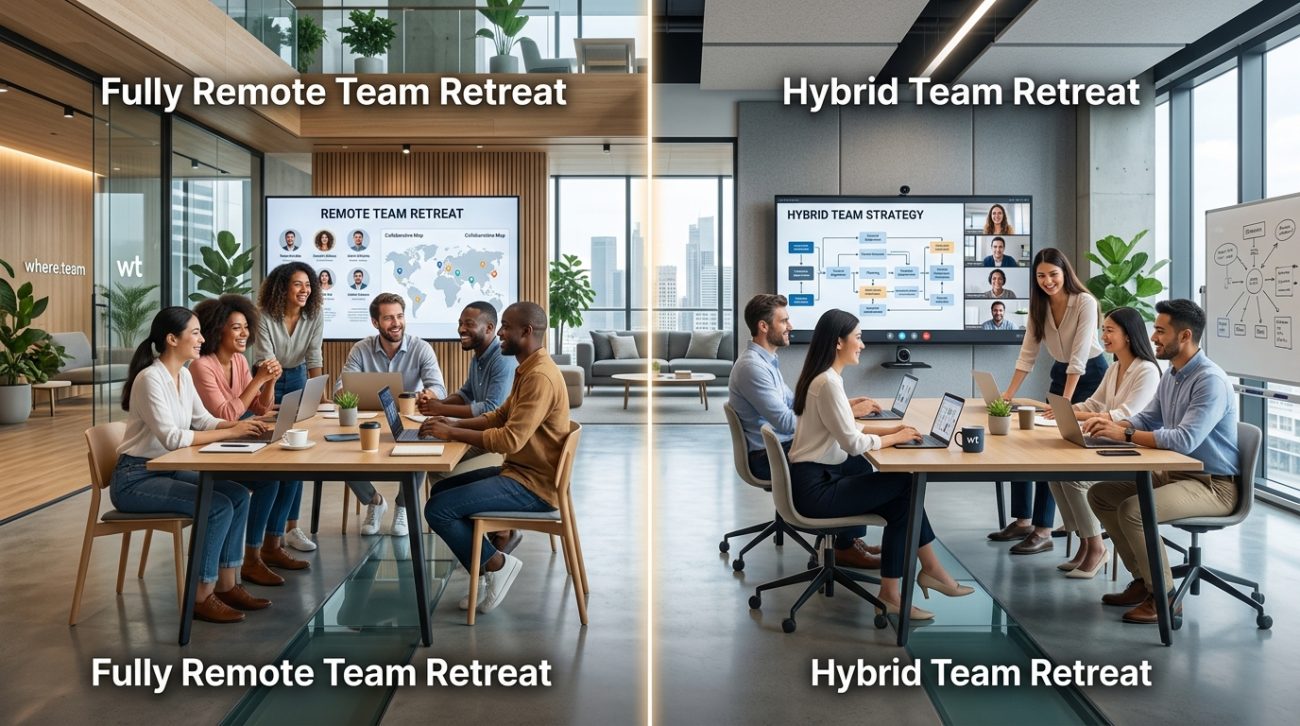
Managing a hybrid team is not the same as managing a fully remote one. Yet most leaders treat them identically, wondering why their strategies fall flat. Hybrid teams face unique challenges that remote teams simply don’t encounter, from coordination complexity to unintentional proximity bias. Getting your approach right means understanding these differences and building systems that work for everyone, regardless of where they sit.
Hybrid teams need distinct strategies from fully remote ones because they face coordination complexity, proximity bias, and split communication channels. Success requires intentional meeting design, documentation standards, and workspace flexibility that addresses both in-office and remote workers equally. The right approach reduces friction, builds trust, and creates genuine equity across locations.
Why hybrid team strategies differ from remote ones
Fully remote teams operate with one universal constraint: everyone works from a distance. This creates a level playing field.
Hybrid teams lack this consistency.
Some people gather in offices. Others join from home. This split creates information asymmetry, where hallway conversations and whiteboard sessions exclude remote participants. The office becomes an accidental VIP lounge.
Remote-first companies solve communication by defaulting to digital. Everyone uses the same tools, follows the same protocols, and accesses the same information streams. Hybrid teams often develop two parallel cultures, one for each location type.
Your meeting dynamics change too. In fully remote setups, everyone appears in identical video boxes. Hybrid meetings often feature a conference room full of people plus a few remote faces on a screen. The remote workers become second-class participants, struggling to hear, contribute, or read body language.
These differences demand intentional hybrid team strategies that address split environments rather than pretending everyone works the same way.
The proximity bias problem you need to solve
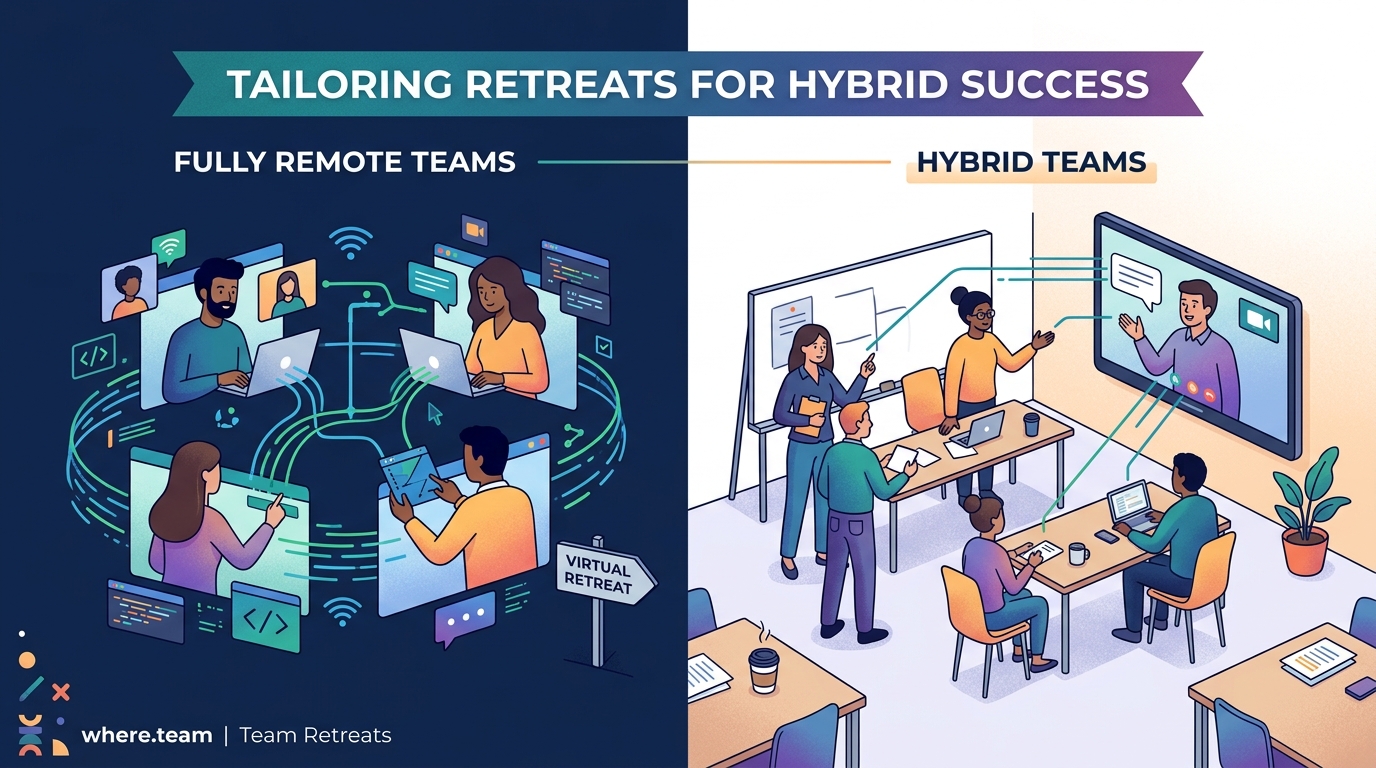
Proximity bias happens when leaders unconsciously favor employees they see in person. It’s not malicious. It’s human nature.
Managers notice the person who stays late at the office. They miss the remote worker who delivered exceptional results at 6 AM. Promotions, projects, and recognition flow toward visible people.
This bias destroys trust faster than almost any other leadership mistake.
Your remote team members will notice. They’ll see office workers getting better opportunities. They’ll feel excluded from decisions made during lunch conversations. Eventually, they’ll leave.
Solving proximity bias requires systems, not good intentions:
- Document all decisions in writing, regardless of where they originate
- Rotate meeting times to accommodate different schedules and locations
- Track project assignments to ensure equitable distribution
- Create explicit criteria for promotions that focus on outcomes, not visibility
- Schedule regular one-on-ones with every team member, not just office workers
Building trust in hybrid teams when half your staff works remotely requires acknowledging this bias exists and actively working against it.
Meeting strategies that work for split teams
Hybrid meetings fail when you treat them like in-person meetings with a camera bolted on. You need different rules.
The remote-first meeting approach
Run every meeting as if everyone is remote, even when some people share a room. This means:
- Everyone joins the video call individually, even office workers
- All participants use the same collaboration tools during the session
- Screen sharing replaces whiteboards for visual thinking
- Chat functions remain open for questions and comments
- Recordings and notes get published immediately after
This approach eliminates the two-tier experience. Nobody gets special access based on physical location.
Some teams resist this. Office workers complain about sitting in separate rooms when they’re in the same building. Push through this resistance. The equity gain outweighs the minor inconvenience.
Asynchronous communication as a core strategy
Hybrid teams span time zones and schedules more than fully remote ones. Your office might operate 9-to-5, but remote workers might prefer different hours.
Stop defaulting to synchronous meetings for everything. Why your remote team needs to ditch real-time meetings and what to do instead becomes even more critical for hybrid setups.
Use these asynchronous formats:
- Recorded video updates for announcements and context
- Written proposals with comment threads for feedback
- Shared documents for collaborative editing
- How to run effective async standup meetings when your team never overlaps for daily coordination
Reserve synchronous time for genuine collaboration, relationship building, and complex problem-solving. Everything else can happen asynchronously.
Documentation standards that prevent information silos
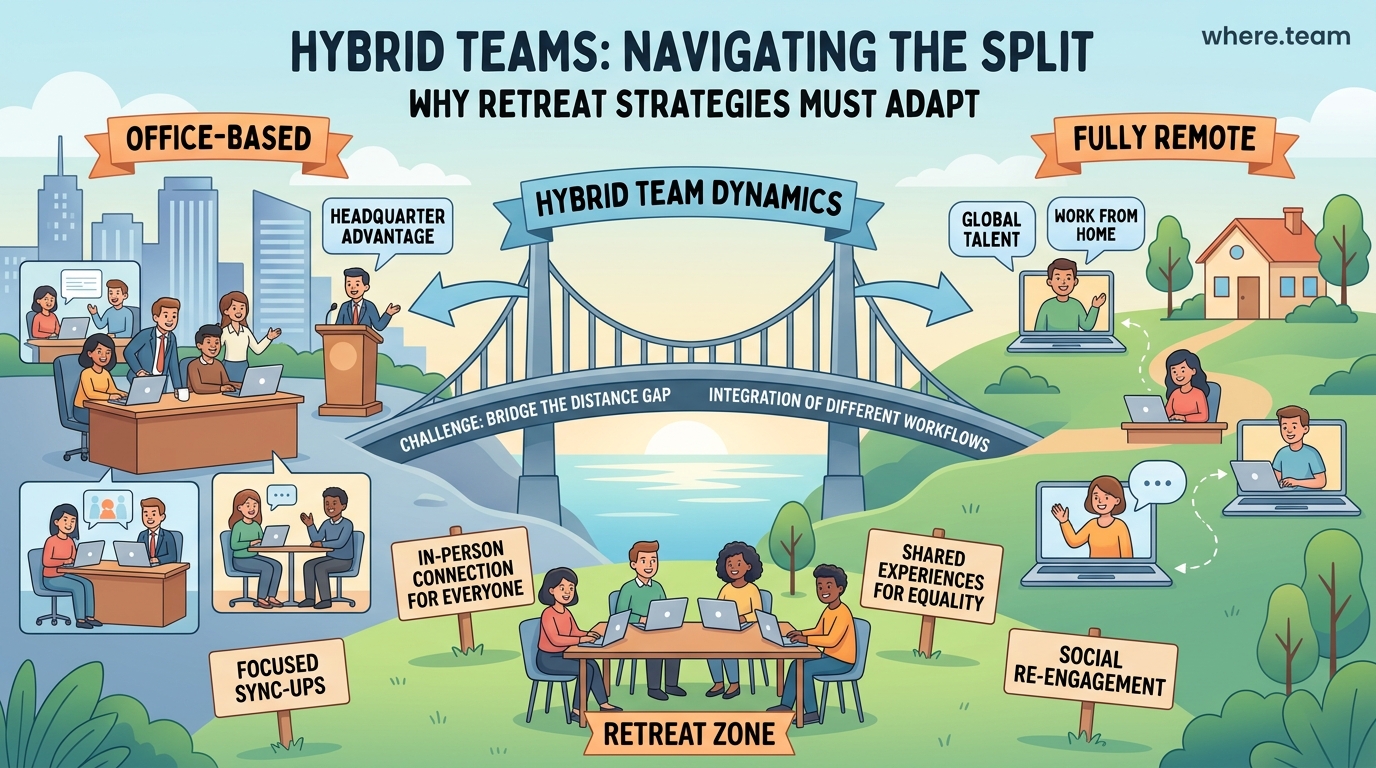
Hybrid teams create information silos accidentally. Office conversations, whiteboard sessions, and hallway decisions never make it into shared systems.
Your remote workers miss critical context. They make decisions based on incomplete information. Projects drift out of alignment.
The complete guide to building a documentation-first culture for distributed teams becomes non-negotiable for hybrid success.
“If it’s not documented, it didn’t happen. This rule protects remote workers from becoming second-class team members and ensures everyone operates from the same information baseline.”
Implement these documentation practices:
- Meeting notes published within two hours, including decisions and action items
- Project updates posted in shared channels, never just discussed in person
- Decision logs that capture why choices were made, not just what was decided
- Onboarding documentation that works without in-person handholding
- Process guides that anyone can follow independently
Workspace strategies for hybrid flexibility
Fully remote teams need home office setups. Hybrid teams need both home and office solutions that actually work together.
Your office space should support collaboration, not replicate home office quiet work. Design for the activities that benefit from physical presence:
- Brainstorming spaces with quality video equipment for remote participants
- Workshop areas for hands-on collaboration
- Social zones for relationship building
- Private rooms for focused video calls
Stop filling offices with rows of desks. Remote workers already have desks at home. When they come in, they need something different.
Day passes vs monthly memberships which coworking option makes sense for hybrid teams helps teams think through flexible workspace options beyond traditional offices.
For home setups, ensure remote workers get equal equipment budgets. The ultimate guide to building a home office that actually boosts productivity covers the essentials, but your company should fund these basics:
- Quality desk and ergonomic chair
- External monitor and proper lighting
- Noise-canceling headphones
- Reliable internet stipend
Common hybrid team mistakes and how to avoid them
| Mistake | Why it happens | Better approach |
|---|---|---|
| Office-centric scheduling | Leaders default to their own location | Rotate meeting times across time zones |
| Informal decision-making | In-person conversations feel natural | Require written decision documentation |
| Unequal equipment access | Budget focus on office infrastructure | Match remote and office equipment spending |
| Two-tier meeting experiences | Conference room setups favor in-person | Everyone joins individually on video |
| Proximity-based recognition | Visibility bias toward office workers | Track and publish contribution metrics |
| Inconsistent communication | Different tools for different locations | Standardize on one platform for all |
Building team culture across locations
Culture doesn’t happen by accident in hybrid teams. You can’t rely on osmosis or casual interactions to build relationships.
Schedule intentional culture-building activities:
- Virtual coffee chats paired randomly across locations
- 11 virtual icebreakers that don’t make your team cringe for regular connection
- Quarterly in-person gatherings that prioritize relationship building over work
- Shared rituals that work remotely and in-office, like weekly wins celebrations
Should your distributed team meet quarterly or annually helps you decide on the right cadence for bringing everyone together physically.
When you do gather in person, focus on activities that benefit from physical presence. Skip the presentations that could happen over video. Instead, run workshops, team-building exercises, and strategic planning sessions that leverage being in the same room.
15 team retreat activities that actually build trust in remote teams works equally well for hybrid teams during these gatherings.
Technology choices that support hybrid work
Your tech stack needs to work seamlessly across locations. Avoid tools that favor one environment over another.
Essential technology for hybrid teams:
- Video conferencing with excellent audio: 15 coworking spaces with the best meeting room technology for virtual-first teams shows what good equipment looks like
- Collaborative documents: Real-time editing that works for everyone
- Project management platforms: Visibility into who’s doing what, regardless of location
- 7 async communication tools that actually work for global teams in 2024: Reduce meeting dependency
- Digital whiteboarding: Replace physical whiteboards with shared visual spaces
Test your technology from both environments. What works perfectly in the office might fail miserably at home, and vice versa.
Schedule design that respects different work modes
Hybrid schedules need more structure than fully remote ones. Without clear guidelines, you’ll end up with chaos.
Define core collaboration hours when everyone should be available, regardless of location. Keep these windows small, perhaps three hours per day. Outside these hours, people work asynchronously.
How to design a hybrid work schedule that actually works for your team provides frameworks for creating schedules that balance flexibility with coordination needs.
Consider these schedule patterns:
- Fixed office days: Entire teams come in on the same days for collaboration
- Flexible office access: People choose when to come in based on their work needs
- Team-based rotation: Different teams have different office days to reduce crowding
- Project-driven presence: People come in when their specific projects need face time
Whatever pattern you choose, make it explicit. Ambiguity creates anxiety and inequity.
Performance management in hybrid environments
Measuring performance gets tricky when some people work visibly and others don’t. You need objective criteria that work across locations.
Focus on outcomes, not activity. Stop tracking:
- Hours in the office
- Response time to messages
- Attendance at optional events
- Visibility to leadership
Start measuring:
- Project completion and quality
- Goal achievement against defined metrics
- Contribution to team objectives
- Collaboration effectiveness with peers
Create clear rubrics for performance reviews that anyone can understand and meet, regardless of where they work. Transparency eliminates the perception of favoritism.
Cost considerations for hybrid operations
The hidden costs of hybrid work and how to budget for them reveals expenses many leaders miss. You’re essentially funding two complete work environments.
Budget for:
- Office space that remains partially empty
- Home office equipment for remote workers
- Technology that works in both environments
- Travel costs for periodic in-person gatherings
- How to choose the perfect coworking space for your remote team’s quarterly meetup when your office isn’t the right venue
These costs exceed fully remote operations but often fall below traditional office-only setups. The key is budgeting honestly for both environments rather than half-funding each.
Making hybrid team strategies stick
Implementation matters more than strategy. You can design perfect hybrid team strategies and still fail if you don’t execute consistently.
Start with these steps:
- Audit your current practices for proximity bias and inequity
- Document your hybrid strategy in writing and share it publicly
- Train managers on hybrid-specific leadership skills
- Create feedback loops so remote workers can report issues safely
- Review and adjust your approach quarterly based on team input
Why your hybrid work policy is failing and 5 ways to fix it helps diagnose common implementation problems before they derail your strategy.
Track leading indicators of hybrid health:
- Participation rates in meetings across locations
- Employee satisfaction scores by work location
- Promotion rates for remote versus office workers
- Project collaboration patterns
- Turnover rates by location type
If you see divergence between remote and office workers on any metric, you have a problem that needs immediate attention.
Strategies that work right now
Hybrid team strategies succeed when they acknowledge the fundamental truth: you’re managing two different work experiences that need to feel equitable.
Stop treating hybrid like remote with an office attached. Stop treating it like office work with remote exceptions. Treat it as its own distinct model that requires intentional design, consistent execution, and regular refinement.
Your team members will notice the difference. They’ll feel included, informed, and valued regardless of where they work. That feeling translates into better performance, lower turnover, and stronger culture.
Start with one change this week. Pick the biggest source of inequity in your current setup and fix it. Then move to the next one. Hybrid excellence comes from consistent improvement, not perfect launch.
